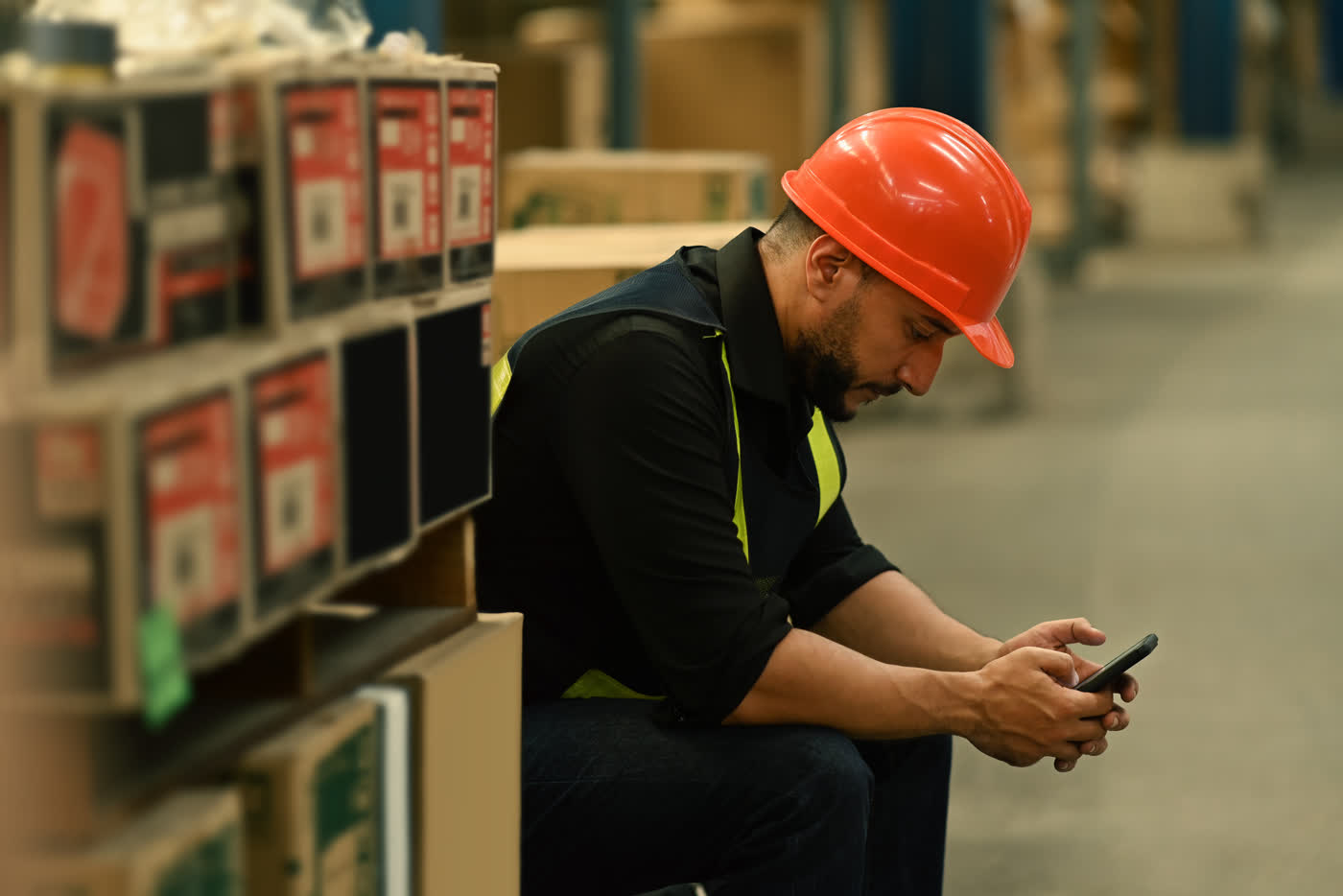
You already knew you should write your procedures down. You were also right that it was too expensive to bother: an afternoon of typing, per procedure, that nobody had. That was the only thing standing between you and a written SOP, and it is no longer true.
Record the next job you were going to do anyway. Any job. Opening a stuck pickle jar, or torquing the head bolts on the line. What comes back is the same either way: a document you would hand to an auditor.
You do the job. The AI watches, understands, and ghost-writes the procedure. Like any good ghost-writer, it takes none of the credit: your name is the one on the document.
Point a phone at the job you were already going to do. Up to five minutes. Works with no signal.
Every word you say, every thing you do, and the exact second each one happened.
Works out where one step ends and the next begins, and which detail is the one that makes or breaks it.
The steps, the key point, and the reason behind it. You read it, sign your name, and take all the credit.
The part nobody else does
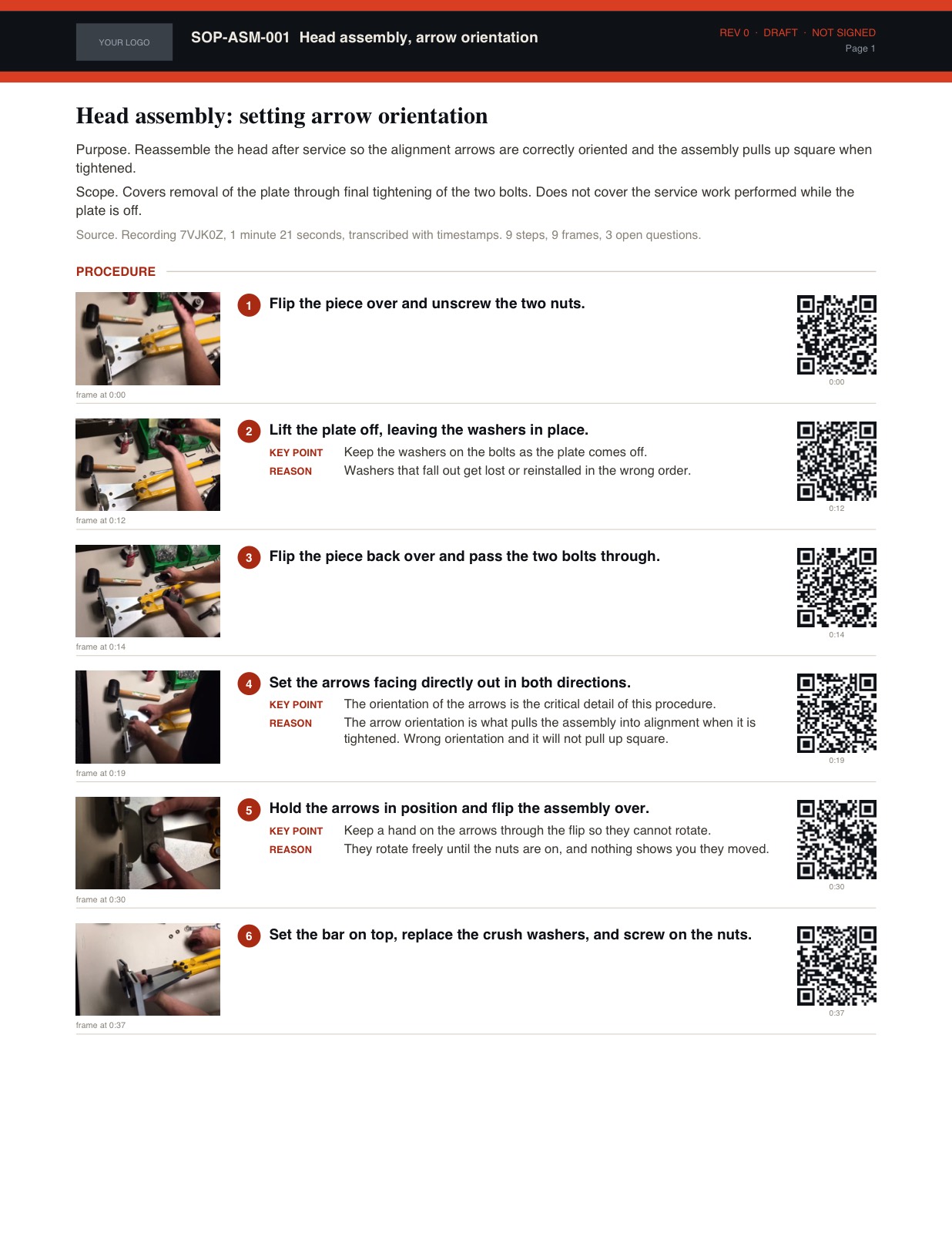
Tape the procedure to the wall. When someone is stuck on step six, they scan step six and watch you do step six. No scrubbing a forty minute video. No hunting down the one person who knows.
Fig. 1 The printed page. Tap a step.
Pressing the gasket corners down before the long edges
Fig. 2 What the QR opens, at that second.
Not a mockup
One minute and twenty-one seconds of somebody reassembling a head, recorded on a phone. Nobody typed the steps, cropped the screenshots, or laid out the page. The only human decisions were the torque value the video never stated, and the signature at the end.
A two-minute recording of how you get the stockroom door unstuck comes back looking exactly like this. That is the point.
Why it never gets written
We are also building a version that produces assembly instructions with pictures, the kind that ship in the box. It is not open yet. Reach out if you want to look at it.
What lands, every time
Even when the job was opening a pickle jar. The output does not get scruffier because the task was small.
Need an extra arm?
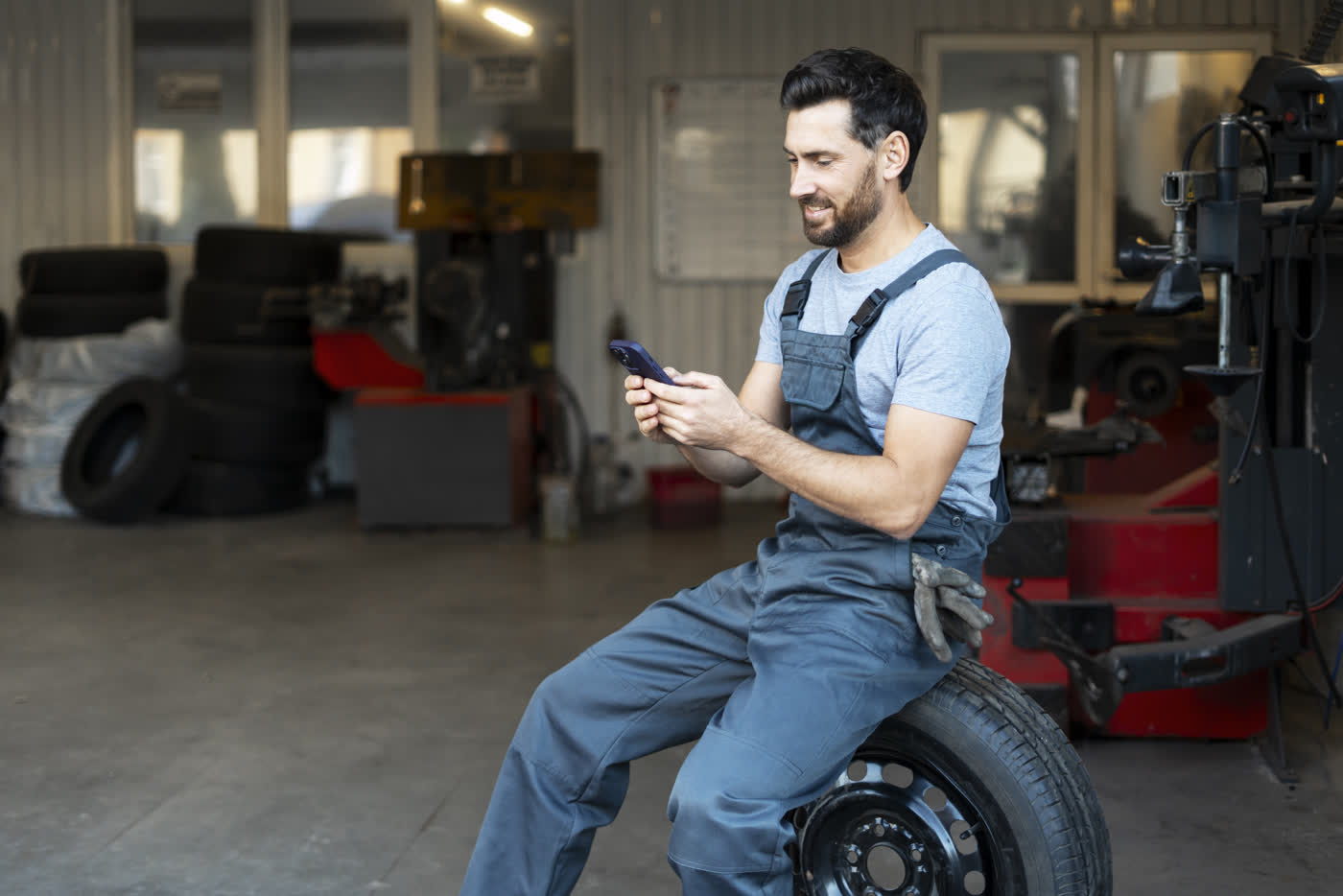
The one thing that actually stops people recording is that both their hands are busy. You cannot do the job and hold the phone. So point the phone at the job and forget it is there.
Fig. 3 Clamps to any bench up to 2 in thick
Ships with the beta. Not required, any phone propped against a toolbox records perfectly well.
Pricing
You do have to create an account first. Not to capture a lead: every video costs us real compute to process, and without a sign-in, bots would burn through it.
After the ten, there is one plan. We kept it deliberately simple.
Just an account.
Per month, per company. Everyone shares it, no per-seat charges.
Beta companies pay nothing while we build it with them, and early companies keep beta pricing locked for a year.
Straight answers
Long videos make bad procedures. We nudge you toward three, and we would rather you split a big job into a few short recordings than send one long one.
If the audio is unusable you get told that, not a confident document full of guesses. Anything the footage did not show goes to an open questions list for a human to answer.
Free for a small number of companies while we build it with them. That is the honest status, not a scarcity tactic.
Not a new project. Pick the job you were already going to do, the one that always gets explained twice, and record it while you do it. Send us the three minutes and we will send back the procedure.